Gen is a Computer Aided Software Engineering (CASE) application development environment marketed by Broadcom Inc. Gen was previously known as CA Gen, IEF (Information Engineering Facility), Composer by IEF, Composer, COOL:Gen, Advantage:Gen and AllFusion Gen. The toolset originally supported the information technology engineering methodology developed by Clive Finkelstein, James Martin and others in the early 1980s. Early versions supported IBM's DB2 database, 3270 'block mode' screens and generated COBOL code. In the intervening years the toolset has been expanded to support additional development techniques such as component-based development; creation of client/server and web applications and generation of C, Java and C#. In addition, other platforms are now supported such as many variants of Unix-like Operating Systems (AIX, HP-UX, Solaris, Linux) as well as Windows. Its range of supported database technologies have widened to include ORACLE, Microsoft SQL Server, ODBC, JDBC as well as the original DB2. The toolset is fully integrated - objects identified during analysis carry forward into design without redefinition. All information is stored in a repository (central encyclopedia). The encyclopedia allows for large team development - controlling access so that multiple developers may not change the same object simultaneously. == History == === 1985-1997: Texas Instruments === It was initially produced by Texas Instruments, with input from James Martin and his consultancy firm James Martin Associates, and was based on the Information Engineering Methodology (IEM). The first version was launched in 1985. IEF (Information Engineering Facility) became popular among large government departments and public utilities. It initially supported a CICS/COBOL/DB2 target environment. However, it now supports a wider range of relational databases and operating systems. IEF was intended to shield the developer from the complexities of building complete multi-tier cross-platform applications. In 1995, Texas Instruments decided to change their marketing focus for the product. Part of this change included a new name - "Composer". By 1996, IEF had become a popular tool. However, it was criticized by some IT professionals for being too restrictive, as well as for having a high per-workstation cost ($15K USD). But it is claimed that IEF reduces development time and costs by removing complexity and allowing rapid development of large scale enterprise transaction processing systems. === 1997-2000: Sterling Software === In 1997, Composer had another change of branding, Texas Instruments sold the Texas Instruments Software division, including the Composer rights, to Sterling Software. Sterling software changed the well known name "Information Engineering Facility" to "COOL:Gen". COOL was an acronym for "Common Object Oriented Language" - despite the fact that there was little object orientation in the product. === 2000-2018: Computer Associates === In 2000, Sterling Software was acquired by Computer Associates (now CA). CA has rebranded the product three times to date and the product is still used widely today. Under CA, recent releases of the tool added support for the CA-Datacom DBMS, the Linux operating system, C# code generation and ASP.NET web clients. The current version is known as CA Gen - version 8 being released in May 2010, with support for customised web services, and more of the toolset being based around the Eclipse framework. === 2018-current: Broadcom === As of 2020, CA Gen is owned and marketed by Broadcom Inc., which rebranded the product to Gen to avoid confusion with the former owner of the product. There are a variety of "add-on" tools available for Gen, including GuardIEn - a Configuration Management and Developer Productivity Suite, QAT Wizard, an interview style wizard that takes advantage of the meta model in Gen, products for multi-platform application reporting and XML/SOAP enabling of Gen applications., and developer productivity tools such as Access Gen, APMConnect, QA Console and Upgrade Console from Response Systems Version 8.6 of CA Gen came to market in June 2016. Version 8.6.3 of CA Gen was released in 2021. Following this release, Broadcom have switched to a continuous delivery model with new features to be delivered as patches.
Quantum machine learning
Quantum machine learning (QML) is the study of quantum algorithms for machine learning. It often refers to quantum algorithms for machine learning tasks which analyze classical data, sometimes called quantum-enhanced machine learning. QML algorithms use qubits and quantum operations to try to improve the space and time complexity of classical machine learning algorithms. Hybrid QML methods involve both classical and quantum processing, where computationally difficult subroutines are outsourced to a quantum device. These routines can be more complex in nature and executed faster on a quantum computer. Furthermore, quantum algorithms can be used to analyze quantum states instead of classical data. The term "quantum machine learning" is sometimes used to refer classical machine learning methods applied to data generated from quantum experiments (i.e. machine learning of quantum systems), such as learning the phase transitions of a quantum system or creating new quantum experiments. QML also extends to a branch of research that explores methodological and structural similarities between certain physical systems and learning systems, in particular neural networks. For example, some mathematical and numerical techniques from quantum physics are applicable to classical deep learning and vice versa. Furthermore, researchers investigate more abstract notions of learning theory with respect to quantum information, sometimes referred to as "quantum learning theory". == Machine learning with quantum computers == Quantum-enhanced machine learning refers to quantum algorithms that solve tasks in machine learning, thereby improving and often expediting classical machine learning techniques. Such algorithms typically require one to encode the given classical data set into a quantum computer to make it accessible for quantum information processing. Subsequently, quantum information processing routines are applied and the result of the quantum computation is read out by measuring the quantum system. For example, the outcome of the measurement of a qubit reveals the result of a binary classification task. While many proposals of QML algorithms are still purely theoretical and require a full-scale universal quantum computer to be tested, others have been implemented on small-scale or special purpose quantum devices. === Quantum associative memories and quantum pattern recognition === Early work on quantum associative memories has been done by Dan Ventura and Tony Martinez and by Carlo A. Trugenberger in the late 1990s and early 2000s. Associative (or content-addressable) memories are able to recognize stored content on the basis of a similarity measure, while random access memories are accessed by the address of stored information and not its content. As such they must be able to retrieve both incomplete and corrupted patterns, the essential machine learning task of pattern recognition. Typical classical associative memories store p patterns in the O ( n 2 ) {\displaystyle O(n^{2})} interactions (synapses) of a real, symmetric energy matrix over a network of n artificial neurons. The encoding is such that the desired patterns are local minima of the energy functional and retrieval is done by minimizing the total energy, starting from an initial configuration. Unfortunately, classical associative memories are severely limited by the phenomenon of cross-talk. When too many patterns are stored, spurious memories appear which quickly proliferate, so that the energy landscape becomes disordered and no retrieval is anymore possible. The number of storable patterns is typically limited by a linear function of the number of neurons, p ≤ O ( n ) {\displaystyle p\leq O(n)} . Quantum associative memories (in their simplest realization) store patterns in a unitary matrix U acting on the Hilbert space of n qubits. Retrieval is realized by the unitary evolution of a fixed initial state to a quantum superposition of the desired patterns with probability distribution peaked on the most similar pattern to an input. By its very quantum nature, the retrieval process is thus probabilistic. Because quantum associative memories are free from cross-talk, however, spurious memories are never generated. Correspondingly, they have a superior capacity than classical ones. The number of parameters in the unitary matrix U is O ( p n ) {\displaystyle O(pn)} . One can thus have efficient, spurious-memory-free quantum associative memories for any polynomial number of patterns. If the matrix U is encoded as a unique operator (as opposed as to a sequence of gates as in the circuit model), e.g. by an optical interferometer, the retrieval becomes efficient even for an exponential number of patterns. === Linear algebra simulation with quantum amplitudes === A number of quantum algorithms for machine learning are based on the idea of amplitude encoding, that is, to associate the amplitudes of a quantum state with the inputs and outputs of computations. Since a state of n {\displaystyle n} qubits is described by 2 n {\displaystyle 2^{n}} complex amplitudes, this information encoding can allow for an exponentially compact representation. Intuitively, this corresponds to associating a discrete probability distribution over binary random variables with a classical vector. The goal of algorithms based on amplitude encoding is to formulate quantum algorithms whose resources grow polynomially in the number of qubits n {\displaystyle n} , which amounts to a logarithmic time complexity in the number of amplitudes and thereby the dimension of the input. Many QML algorithms in this category are based on variations of the quantum algorithm for linear systems of equations (colloquially called HHL, after the paper's authors) which, under specific conditions, performs a matrix inversion using an amount of physical resources growing only logarithmically in the dimensions of the matrix. One of these conditions is that a Hamiltonian which entry-wise corresponds to the matrix can be simulated efficiently, which is known to be possible if the matrix is sparse or low rank. For reference, any known classical algorithm for matrix inversion requires a number of operations that grows more than quadratically in the dimension of the matrix (e.g. O ( n 2.373 ) {\displaystyle O{\mathord {\left(n^{2.373}\right)}}} ), but they are not restricted to sparse matrices. Quantum matrix inversion can be applied to machine learning methods in which the training reduces to solving a linear system of equations, for example in least-squares linear regression, the least-squares version of support vector machines, and Gaussian processes. A crucial bottleneck of methods that simulate linear algebra computations with the amplitudes of quantum states is state preparation, which often requires one to initialise a quantum system in a state whose amplitudes reflect the features of the entire dataset. Although efficient methods for state preparation are known for specific cases, this step easily hides the complexity of the task. === Variational quantum algorithms (VQAs) === In a variational quantum algorithm, a classical computer optimizes the parameters used to prepare a quantum state, while a quantum computer is used to do the actual state preparation and measurement. VQAs are considered promising candidates for noisy intermediate-scale quantum computers. Variational quantum circuits (or parameterized quantum circuits) are a popular class of VQAs where the parameters are those used in a fixed quantum circuit. Researchers have studied VQCs to solve optimization problems and find the ground state energy of complex quantum systems, which were difficult to solve using a classical computer. === Quantum binary classifier === Pattern reorganization is one of the important tasks of machine learning, binary classification is one of the tools or algorithms to find patterns. Binary classification is used in supervised learning and in unsupervised learning. In QML, classical bits are converted to qubits and they are mapped to Hilbert space; complex value data are used in a quantum binary classifier to use the advantage of Hilbert space. By exploiting the quantum mechanic properties such as superposition, entanglement, interference the quantum binary classifier produces the accurate result in short period of time. === Quantum machine learning algorithms based on Grover search === Another approach to improving classical machine learning with quantum information processing uses amplitude amplification methods based on Grover's search algorithm, which has been shown to solve unstructured search problems with a quadratic speedup compared to classical algorithms. These quantum routines can be employed for learning algorithms that translate into an unstructured search task, as can be done, for instance, in the case of the k-medians and the k-nearest neighbors algorithms. Other applications include quadratic speedups in the training of perceptrons. An e
Alt TikTok
Alt TikTok (or 2020 Alt) was an online youth subculture and internet community that emerged on TikTok in 2020. Alt TikTok users (also known as alt girls, alt boys, or alt kids) emerged as primarily LGBTQ+ individuals who were in contrast to "Straight TikTok" which was seen as the mainstream and heteronormative side of the platform. The subculture became closely associated with music surrounding the hyperpop scene, particularly 100 gecs and also led to a short-lived fashion style and Internet aesthetic adopted by Generation Z during the COVID-19 lockdowns. Notable artists associated with the movement included Girl in Red, Freddie Dredd, David Shawty, WHOKILLEDXIX, and 645AR. While "alt kid" might imply a general association with traditional alternative fashion, the subculture was more an offshoot of e-girls and e-boys. In 2023, the hashtag #altfashion on TikTok amassed over 1.8 billion views. == History == Around mid-2020, users on TikTok began to group different content on the site into labels like "elite TikTok", "deep TikTok", and "floptok". These categories acted as different "sides of TikTok", deviating from mainstream lip syncing, online trends, and dance videos. Alt TikTok became one of the many subcultural communities to emerge during this period, initially referred to interchangeably with "elite TikTok". The movement quickly identified itself with alternative and queer users, in contrast to "Straight TikTok", also known as the "straight side of TikTok", which was seen as the mainstream and heteronormative side of the platform. Alt TikTok was accompanied by memes with surrealist or supernatural themes (sometimes being described as cursed), such as videos with heavy saturation and humanoid animals. One of the popular videos from Alt TikTok, gaining 18 million likes, shows a llama dancing to a cover of a song from a Russian commercial by the cereal brand Miel Pops, later becoming a viral audio. Some Alt TikTok users personified brands and products in what was referred to as Retail TikTok. In 2020, Rolling Stone described Alt TikTok as "one of the primary countercultures on the app." In 2020, American journalist Taylor Lorenz stated in an article of The New York Times, "Every pop sensation needs its ironic counterpoints. Alt Tiktok gets it done. [...] alt TikTok stars like Mooptopia are mainstays on the more indie side of the app. They aren't the popular crowd, but their cool, quirky content still attracts millions." === Trump rally trolling === In June 2020, alt TikTok and K-pop twitter users coordinated a strategy to ruin a Trump rally in Tulsa, Oklahoma. American politician and activist Alexandria Ocasio-Cortez later saluted the individuals for their "Trump troll". == Alt subculture == In 2020, Alt TikTok was one of many subcultural communities to emerge on TikTok, alongside Deep TikTok (aka DeepTok) and Flop TikTok (aka Floptok). The alt kid subculture emerged from Alt TikTok primarily among young Gen Z women, influenced by online fashion and aesthetics shaped by e-girls and e-boys. The movement was accelerated by the COVID-19 lockdowns, while the subculture itself stood in opposition to mainstream "Straight TikTok" and the VSCO girl movement, primarily adopting aspects of queer and alternative culture. While the phrase might imply a general association with alternative fashion or alternative culture, it is more accurately understood as a specific internet-driven outgrowth of online aesthetic youth subcultures like e-girls and e-boys. The alt subculture's visual style blended influences from goth, punk, emo, and grunge, often expressed through fashion, music taste, and online presence. === Style and music === The style of alt-girls is reminiscent of a myriad of previous alternative fashion trends, often blending these influences with online aesthetics. In 2020, TikTok alt-girls were teens ranging from ages 13 to 16, who tended to wear friendship bracelets, goth boots, Dr. Martens, bunny and frog hats, piercings, and split-dyed hair, as well as iconography lifted from Monster Energy and Hello Kitty. Some alt-girls displayed a love of cosplay, while drawing from Japanese anime and manga, particularly Danganronpa and Haikyu!!, which originally gained traction on the app through Anime TikTok (aka Anitok). Alt TikTok has been noted for being primarily influenced by queer and alternative culture, positioning itself in contrast to "Straight TikTok", which focused on mainstream dances and music. Alt kids frequently intersected with the e-girls and e-boys subculture, in terms of music, style, visual media, and aesthetics. Several musicians and artists were closely associated with the alt subculture, particularly those in the hyperpop scene, while alt tiktok users became important in the wider popularization of artists like 100 gecs. Notable prominent artists associated with Alt Tiktok included Girl in Red, Freddie Dredd, David Shawty, WHOKILLEDXIX, and 645AR, alongside music by YouTubers turned musicians such as Wilbur Soot's "I'm in Love With an E‐Girl" and Corpse Husband's "E-Girls Are Ruining My Life!". == Legacy == In 2020, Pitchfork claimed Alt TikTok as having an influence on wider music trends, stating: "Alt TikTok's music is now a hot zone for major record labels, pushing it even further into the mainstream". After the COVID-19 lockdowns, Alt TikTok, alongside its subculture, fell out of prominence and was taken over by other Gen Z-related internet aesthetics, developments, and online trends.
Account verification
Account verification is the process of verifying that a new or existing account is owned and operated by a specified real individual or organization. A number of websites, for example social media websites, offer account verification services. Verified accounts are often visually distinguished by check mark icons or badges next to the names of individuals or organizations. Account verification can enhance the quality of online services, mitigating sockpuppetry, bots, trolling, spam, vandalism, fake news, disinformation and election interference. == History == Account verification was introduced by Twitter in June 2009, initially as a feature for public figures and accounts of interest, individuals in "music, acting, fashion, government, politics, religion, journalism, media, sports, business and other key interest areas". A similar verification system was adopted by Google+ in 2011, Facebook page in October 2015 (Available in United States, Canada, United Kingdom, Australia and New Zealand) Facebook profile and Facebook page in 2018 (Available in Worldwide) Instagram in 2014, and Pinterest in 2015. On YouTube, users are able to submit a request for a verification badge once they obtain 100,000 or more subscribers. It also has an "official artist" badge for musicians and bands. In July 2016, Twitter announced that, beyond public figures, any individual would be able to apply for account verification. This was temporarily suspended in February 2018, following a backlash over the verification of one of the organisers of the far-right Unite the Right rally due to a perception that verification conveys "credibility" or "importance". In March 2018, during a live-stream on Periscope, Jack Dorsey, co-founder and CEO of Twitter, discussed the idea of allowing any individual to get a verified account. Twitter reopened account verification applications in May 2021 after revamping their account verification criteria. This time offering notability criteria for the account categories of government, companies, brands, and organizations, news organizations and journalists, entertainment, sports and activists, organizers, and other influential individuals. Instagram began allowing users to request verification in August 2018. In April 2018, Mark Zuckerberg, co-founder and CEO of Facebook, announced that purchasers of political or issue-based advertisements would be required to verify their identities and locations. He also indicated that Facebook would require individuals who manage large pages to be verified. In May 2018, Kent Walker, senior vice president of Google, announced that, in the United States, purchasers of political-leaning advertisements would need to verify their identities. In November 2022, Elon Musk included a blue verification check mark with a paid Twitter Blue monthly membership. Prior to Musk's acquisition of Twitter, Twitter offered this check mark at no charge to confirmed high profile users. On December 19, 2022, Twitter introduced two new check mark colors: gold for accounts from official businesses and organizations, and grey for accounts from governments or multilateral organizations. The type of check mark can be confirmed by visiting the profile page, then clicking or tapping on the check mark. == Techniques == === Identity verification services === Identity verification services are third-party solutions which can be used to ensure that a person provides information which is associated with the identity of a real person. Such services may verify the authenticity of identity documents such as drivers licenses or passports, called documentary verification, or may verify identity information against authoritative sources such as credit bureaus or government data, called nondocumentary verification. === Identity documents verification === The uploading of scanned or photographed identity documents is a practice in use, for example, at Facebook. According to Facebook, there are two reasons that a person would be asked to send a scan of or photograph of an ID to Facebook: to show account ownership and to confirm their name. In January 2018, Facebook purchased Confirm.io, a startup that was advancing technologies to verify the authenticity of identification documentation. === Biometric verification === === Behavioral verification === Behavioral verification is the computer-aided and automated detection and analysis of behaviors and patterns of behavior to verify accounts. Behaviors to detect include those of sockpuppets, bots, cyborgs, trolls, spammers, vandals, and sources and spreaders of fake news, disinformation and election interference. Behavioral verification processes can flag accounts as suspicious, exclude accounts from suspicion, or offer corroborating evidence for processes of account verification. === Bank account verification === Identity verification is required to establish bank accounts and other financial accounts in many jurisdictions. Verifying identity in the financial sector is often required by regulation such as Know Your Customer or Customer Identification Program. Accordingly, bank accounts can be of use as corroborating evidence when performing account verification. Bank account information can be provided when creating or verifying an account or when making a purchase. === Postal address verification === Postal address information can be provided when creating or verifying an account or when making and subsequently shipping a purchase. A hyperlink or code can be sent to a user by mail, recipients entering it on a website verifying their postal address. === Telephone number verification === A telephone number can be provided when creating or verifying an account or added to an account to obtain a set of features. During the process of verifying a telephone number, a confirmation code is sent to a phone number specified by a user, for example in an SMS message sent to a mobile phone. As the user receives the code sent, they can enter it on the website to confirm their receipt. === Email verification === An email account is often required to create an account. During this process, a confirmation hyperlink is sent in an email message to an email address specified by a person. The email recipient is instructed in the email message to navigate to the provided confirmation hyperlink if and only if they are the person creating an account. The act of navigating to the hyperlink confirms receipt of the email by the person. The added value of an email account for purposes of account verification depends upon the process of account verification performed by the specific email service provider. === Multi-factor verification === Multi-factor account verification is account verification which simultaneously utilizes a number of techniques. === Multi-party verification === The processes of account verification utilized by multiple service providers can corroborate one another. OpenID Connect includes a user information protocol which can be used to link multiple accounts, corroborating user information. == Account verification and good standing == On some services, account verification is synonymous with good standing. Twitter reserves the right to remove account verification from users' accounts at any time without notice. Reasons for removal may reflect behaviors on and off Twitter and include: promoting hate and/or violence against, or directly attacking or threatening other people on the basis of race, ethnicity, national origin, sexual orientation, gender, gender identity, religious affiliation, age, disability, or disease; supporting organizations or individuals that promote the above; inciting or engaging in the harassment of others; violence and dangerous behavior; directly or indirectly threatening or encouraging any form of physical violence against an individual or any group of people, including threatening or promoting terrorism; violent, gruesome, shocking, or disturbing imagery; self-harm, suicide; and engaging in other activity on Twitter that violates the Twitter Rules. In April 2023, Blue ticks were removed from all Twitter accounts that had not subscribed to Twitter Blue.
The Dodo (website)
The Dodo is an American online publisher focused on animals. The website was launched in January 2014 by Izzie Lerer, the daughter of media executive Kenneth Lerer, and journalist Kerry Lauerman. The Dodo has become one of the most popular Facebook publishers, garnering 1 billion video views from the social network in November 2015. The Dodo is headquartered in New York, New York. == History == The company—named after the first recorded species that humans drove to extinction—was founded by Lerer out of "a personal passion for the subject manner". Lerer has a PhD in animal studies with a focus on animal ethics and human relationships from Columbia University, launching the website after noticing the viral success of animal videos online but seeing no one "really owned the space." The Dodo's editorial and video production staff unionized with the Writers Guild of America, East in April 2018.
Pedagogical agent
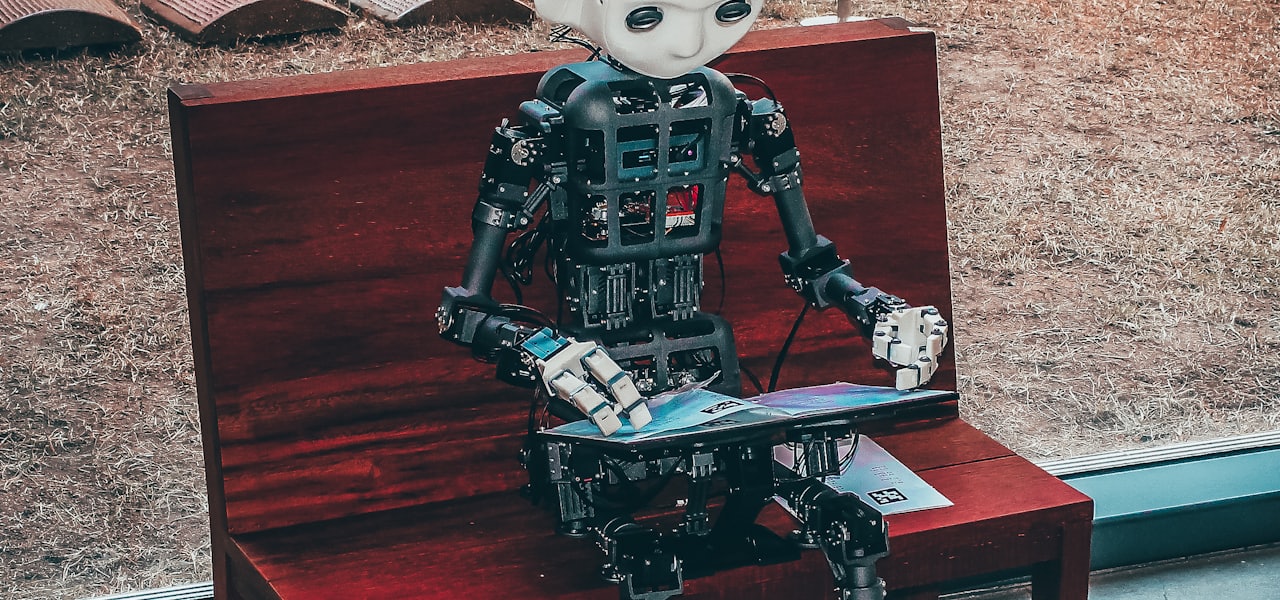
A pedagogical agent is a concept borrowed from computer science and artificial intelligence and applied to education, usually as part of an intelligent tutoring system (ITS). It is a simulated human-like interface between the learner and the content, in an educational environment. A pedagogical agent is designed to model the type of interactions between a student and another person. Mabanza and de Wet define it as "a character enacted by a computer that interacts with the user in a socially engaging manner". A pedagogical agent can be assigned different roles in the learning environment, such as tutor or co-learner, depending on the desired purpose of the agent. "A tutor agent plays the role of a teacher, while a co-learner agent plays the role of a learning companion". == History == The history of Pedagogical Agents is closely aligned with the history of computer animation. As computer animation progressed, it was adopted by educators to enhance computerized learning by including a lifelike interface between the program and the learner. The first versions of a pedagogical agent were more cartoon than person, like Microsoft's Clippy which helped users of Microsoft Office load and use the program's features in 1997. However, with developments in computer animation, pedagogical agents can now look lifelike. By 2006 there was a call to develop modular, reusable agents to decrease the time and expertise required to create a pedagogical agent. There was also a call in 2009 to enact agent standards. The standardization and re-usability of pedagogical agents is less of an issue since the decrease in cost and widespread availability of animation tools. Individualized pedagogical agents can be found across disciplines including medicine, math, law, language learning, automotive, and armed forces. They are used in applications directed to every age, from preschool to adult. == Learning theories related to pedagogical agent design == === Distributed cognition theory === Distributed cognition theory is the method in which cognition progresses in the context of collaboration with others. Pedagogical agents can be designed to assist the cognitive transfer to the learner, operating as artifacts or partners with collaborative role in learning. To support the performance of an action by the user, the pedagogical agent can act as a cognitive tool as long as the agent is equipped with the knowledge that the user lacks. The interactions between the user and the pedagogical agent can facilitate a social relationship. The pedagogical agent may fulfill the role of a working partner. === Socio-cultural learning theory === Socio-cultural learning theory is how the user develops when they are involved in learning activities in which there is interaction with other agents. A pedagogical agent can: intervene when the user requests, provide support for tasks that the user cannot address, and potentially extend the learners cognitive reach. Interaction with the pedagogical agent may elicit a variety of emotions from the learner. The learner may become excited, confused, frustrated, and/or discouraged. These emotions affect the learners' motivation. === Extraneous Cognitive Load === Extraneous cognitive load is the extra effort being exerted by an individual's working memory due to the way information is being presented. A pedagogical agent can increase the user's cognitive load by distracting them and becoming the focus of their attention, causing split attention between the instructional material and the agent. Agents can reduce the perceived cognitive load by providing narration and personalization that can also promote a user's interest and motivation. While research on the reduction of cognitive load from pedagogical agents is minimal, more studies have shown that agents do not increase it. == Effectiveness == It has been suggested by researchers that pedagogical agents may take on different roles in the learning environment. Examples of these roles are: supplanting, scaffolding, coaching, testing, or demonstrating or modelling a procedure. A pedagogical agent as a tutor has not been demonstrated to add any benefit to an educational strategy in equivalent lessons with and without a pedagogical agent. According to Richard Mayer, there is some support in research for pedagogical agent increasing learning, but only as a presenter of social cues. A co-learner pedagogical agent is believed to increase the student's self-efficacy. By pointing out important features of instructional content, a pedagogical agent can fulfill the signaling function, which research on multimedia learning has shown to enhance learning. Research has demonstrated that human-human interaction may not be completely replaced by pedagogical agents, but learners may prefer the agents to non-agent multimedia systems. This finding is supported by social agency theory. Much like the varying effectiveness of the pedagogical agent roles in the learning environment, agents that take into account the user's affect have had mixed results. Research has shown pedagogical agents that make use of the users’ affect have been found to increase user knowledge retention, motivation, and perceived self-efficacy. However, with such a broad range of modalities in affective expressions, it is often difficult to utilize them. Additionally, having agents detect a user's affective state with precision remains challenging, as displays of affect are different across individuals. == Design == === Attractiveness === The appearance of a pedagogical agent can be manipulated to meet the learning requirements. The attractiveness of a pedagogical agent can enhance student's learning when the users were the opposite gender of the pedagogical agent. Male students prefer a sexy appearance of a female pedagogical agents and dislike the sexy appearance of male agents. Female students were not attracted by the sexy appearance of either male or female pedagogical agents. === Affective Response === Pedagogical agents have reached a point where they can convey and elicit emotion, but also reason about and respond to it. These agents are often designed to elicit and respond to affective actions from users through various modalities such as speech, facial expressions, and body gestures. They respond to the affective state of the given user, and make use of these modalities using a wide array of sensors incorporated into the design of the agent. Specifically in education and training applications, pedagogical agents are often designed to increasingly recognize when users or learners exhibit frustration, boredom, confusion, and states of flow. The added recognition in these agents is a step toward making them more emotionally intelligent, comforting and motivating the users as they interact. === Digital Representation === The design of a pedagogical agent often begins with its digital representation, whether it will be 2D or 3D and static or animated. Several studies have developed pedagogical agents that were both static and animated, then evaluated the relative benefits. Similar to other design considerations, the improved learning from static or animated agents remains questionable. One study showed that the appearance of an agent portrayed using a static image can impact a user's recall, based on the visual appearance. Other research found results that suggest static agent images improve learning outcomes. However, several other studies found user's learned more when the pedagogical agent was animated rather than static. Recently a meta-analysis of such research found a negligible improvement in learning via pedagogical agents, suggesting more work needs to be done in the area to support any claims.
Rider Spoke
Rider Spoke developed by Blast Theory in collaboration with the Mixed Reality Lab was first staged at the Barbican, London in October 2007. Created for cyclists, it combines elements of theatre, performance, game play and state of the art technology. Rider Spoke was built in the IPerG project on the EQUIP architecture. Rider Spoke has since been presented in Athens (2008), Brighton (2008), Budapest (2008), Sydney (2009, Adelaide (2009) and Liverpool (2010).